Contractors insurance in Alabama: what every builder needs to know
If you run a construction business in Alabama, contractors insurance is not a formality you handle once and forget. It is the financial foundation that keeps your company standing when a job site accident, a property damage claim, or a workers comp dispute threatens to wipe out everything you have built. Alabama's construction industry is active from Birmingham and Tuscaloosa down through Montevallo, Pelham, and Calera, and the risks on every one of those job sites are real. This post breaks down what coverage you need, what the law requires, and how to put together a policy package that protects your business without overpaying.
What contractors insurance actually covers
The phrase "contractors insurance" is an umbrella term, not a single policy. Most contractors in Alabama need a combination of several coverages. Understanding what each piece does helps you spot gaps before a claim exposes them.
General liability insurance
General liability (GL) is the cornerstone of any contractor's coverage package. It pays for third-party bodily injury and property damage claims that arise from your operations. If a subcontractor trips over your equipment and breaks a wrist, or your crew accidentally damages a neighbor's fence during a renovation, GL is what responds. Most commercial clients, general contractors, and municipalities in Alabama will require you to carry at least $1 million per occurrence / $2 million aggregate before they let you on site. You can read more about how GL works for Alabama businesses on our general liability insurance page.
Workers compensation insurance
Alabama law requires any employer with five or more employees to carry workers compensation insurance . Construction is one of the few industries where enforcement is tighter and audits are more common, because the injury rates are higher. Falls from scaffolding, equipment accidents, and heat-related illness are all covered events. Workers comp pays for the injured worker's medical bills, a portion of lost wages, and rehabilitation. It also protects you from lawsuits by injured employees in most situations. Even if you have fewer than five workers and are not legally required to carry it, skipping workers comp on a construction site is a significant financial gamble. Our Alabama workers compensation guide covers the state requirements in detail.
Builders risk insurance
Builders risk insurance covers the structure under construction and materials on site against fire, theft, vandalism, wind, hail, and certain other perils. It is a temporary policy that runs for the duration of the project, from groundbreaking to certificate of occupancy. In Alabama, where severe thunderstorms and the occasional tornado can roll through with little warning, having this coverage in place for every project is essential. Lenders almost always require it on financed projects. Learn more on the builders risk insurance page.
Inland marine insurance
Your tools and equipment move from job site to job site. Inland marine insurance (also called tools and equipment coverage) protects that gear while it is in transit, stored on a trailer, or sitting at a job site overnight. A standard commercial property policy only covers items at a fixed location. If a generator gets stolen off your trailer in Bessemer or a compressor is damaged during a haul to a job in Gadsden, inland marine is what pays for it.
Commercial auto insurance
If you use trucks, vans, or any other vehicles for your business, personal auto insurance will not cover a claim that happens while you are hauling materials or driving to a job. Commercial auto insurance provides the liability and physical damage coverage your business vehicles need. Alabama minimum liability limits for commercial vehicles vary by vehicle weight and usage, so it is worth reviewing your fleet with an agent who understands the state's requirements.
Commercial umbrella insurance
A serious job site accident involving multiple injuries or a large property damage claim can exceed the limits of your general liability policy quickly. A commercial umbrella policy sits above your primary coverage and pays once those limits are exhausted. For contractors doing larger projects, government work, or working as a subcontractor on commercial builds, umbrella coverage in the $1 million to $5 million range is common and often contractually required.
Alabama-specific requirements and risks contractors face
Alabama does not have a single statewide contractor licensing law that covers every trade uniformly. Licensing requirements vary by trade and by municipality. The Alabama Licensing Board for General Contractors (ALBGC) oversees commercial general contractors working on projects valued at $50,000 or more , and proof of insurance is a hard requirement for licensure. Electrical, plumbing, HVAC, and other specialty trades have their own licensing boards, each with their own insurance minimums.
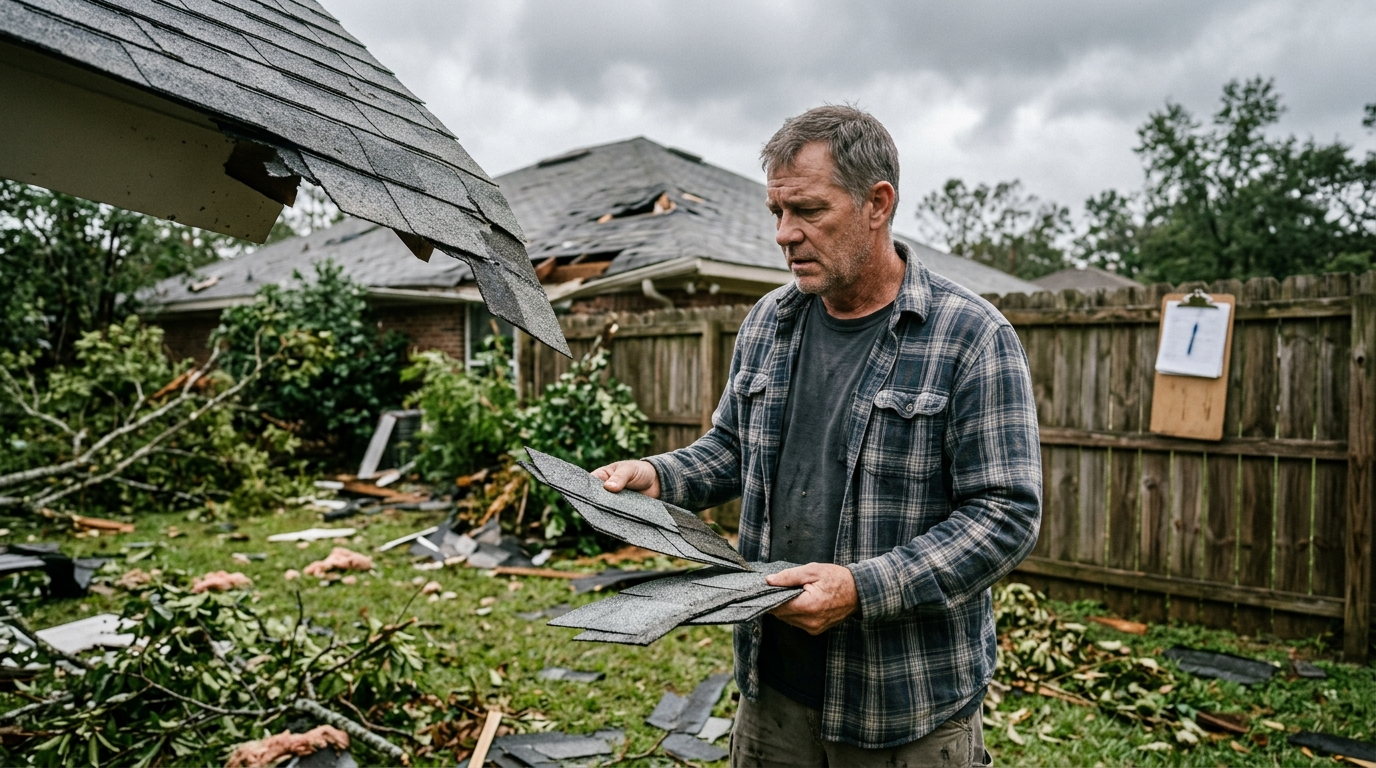
Beyond licensing, the practical risks in Alabama construction are shaped by the climate. The state sits in a region prone to severe thunderstorms from spring through fall, and the Birmingham metro and surrounding counties have seen tornado damage that interrupted projects, destroyed materials on site, and injured workers. Builders in coastal or lower-lying parts of the state also deal with flooding risk. If you are working on projects near waterways or in flood-prone areas around Tuscaloosa or Montgomery, your builders risk policy language around water damage deserves a close read.
Heat is another real risk. Alabama summers regularly push heat index values well above 100 degrees. OSHA's heat illness standards apply to outdoor workers, and a heat-related hospitalization on your site is a workers comp claim. Proper planning reduces the frequency, but you still need the coverage in place.
Common coverage gaps that hurt Alabama contractors
The most expensive insurance mistake contractors make is not buying the wrong coverage. It is buying a policy with gaps they do not discover until a claim is denied. Here are the gaps that come up most often:
- Completed operations coverage. General liability has two components: ongoing operations (what happens while you are working) and completed operations (what happens after the job is done). A homeowner files a claim two years later because your framing work contributed to a water intrusion problem. Completed operations is what responds, and some stripped-down GL policies limit this coverage or carry separate aggregates. Always confirm your policy includes it.
- Subcontractor liability. If you hire uninsured subcontractors, your GL policy may cover their work, but many policies exclude damage caused by uninsured subs or charge a premium surcharge. Require certificates of insurance from every sub and keep them on file.
- Employee tools vs. business tools. Inland marine policies typically cover tools owned by the business. A worker's personal tools stolen from a job site may not be covered. Set clear expectations with your crew about what is and is not protected.
- Faulty workmanship exclusions. GL policies do not pay to redo your own bad work. If the concrete you poured cracked because of a mixing error, that is your cost. GL pays for damage to other property that results from the faulty work, not the rework itself.
- Professional liability. Design-build contractors and those who offer any form of project management or design advice should consider professional liability (errors and omissions) insurance . If a client claims your design recommendations caused financial loss or structural issues, a standard GL policy will not cover that type of claim.
How much does contractors insurance cost in Alabama?
Cost depends on several factors: your trade, annual revenue, payroll, the types of projects you take on, your claims history, and the limits and deductibles you choose. Here are realistic ranges for small to mid-size contractors in Alabama:
- General liability. A sole proprietor doing light residential work might pay $900 to $1,800 per year . A general contractor with crews doing commercial work can easily pay $5,000 to $15,000 or more annually , depending on revenue and project scope.
- Workers compensation. Rates are filed by class code and set by the Alabama Department of Insurance. Construction class codes carry some of the highest rates in any industry. Roofing contractors, for example, may pay $15 to $30 per $100 of payroll or more. Finished interior work like flooring or drywall carries lower rates.
- Builders risk. Typically priced as a percentage of the completed project value. A $500,000 residential build might carry a builders risk premium in the range of $1,500 to $3,000 for the construction period.
- Commercial auto. A single work truck with a clean driving record might run $1,200 to $2,500 per year . A fleet of five vehicles will cost proportionally more.
Working with an independent agent who can compare rates across multiple carriers is the most reliable way to get competitive pricing without sacrificing coverage quality. If you are curious about how business insurance in Alabama works more broadly, our Alabama small business insurance guide is a good companion read.
Putting together the right package for your contracting business
There is no single policy that covers every risk a contractor faces. The right package depends on your trade, your clients, and the size of your operation. A residential remodeler in Hoover has different needs than a commercial general contractor doing municipal work in Montgomery. A specialty subcontractor doing electrical work in Gadsden needs coverage configured differently than a landscaping company in Helena.
Here is a baseline package most Alabama contractors should have in place:
- General liability at limits that meet both your licensing board requirements and your clients' contract requirements. $1 million / $2 million is the floor for most commercial work.
- Workers compensation that covers all employees properly classified by job function. Misclassifying a roofer as a clerical worker to reduce premium is audit bait and leaves you exposed.
- Inland marine / tools and equipment for your mobile gear, especially anything valued over $5,000 per item or in aggregate.
- Commercial auto on every vehicle used for business, including trucks that pull equipment trailers.
- Builders risk on every project where you are the responsible party for the structure under construction.
- Commercial umbrella for any work on larger commercial projects, public work, or wherever your GL limits could realistically be exceeded.
Some contractors bundle coverages into a Business Owners Policy (BOP) , which combines commercial property and general liability into a single policy at a lower combined cost. Not every contractor qualifies for a BOP (it depends on business size and revenue), but for smaller contracting operations it is worth asking about. You can see what a BOP covers on the BOP page.
Get the right contractors insurance coverage with The Rinehart Agency
The Rinehart Agency is an independent insurance agency serving contractors and construction businesses across Alabama, including Birmingham, Tuscaloosa, Hoover, Pelham, Calera, Montgomery, and the surrounding areas. Because we are independent, we are not tied to a single carrier. We compare rates and coverage options from multiple insurance companies to find the package that fits your trade, your projects, and your budget.
Whether you are a sole proprietor just getting licensed or a general contractor managing multiple crews and subcontractors, we can help you build a coverage program that holds up when something goes wrong on a job site. Reach out to us at (205) 671-5555 or contact us online to get a quote. Getting the right coverage in place is one of the smartest moves you can make for your business.