What Alabama homeowners insurance actually covers (and what it doesn't)
Alabama homeowners insurance is one of those things most people buy once and never think about again until something goes wrong. But given that Alabama ranks among the top states for tornado activity, severe thunderstorms, and tropical systems pushing up from the Gulf, what your policy actually covers matters. Understanding the basics before a claim happens can mean the difference between a full recovery and a very expensive lesson.
A standard homeowners policy (typically an HO-3 form in Alabama) bundles several types of protection into one package:
- Dwelling coverage pays to repair or rebuild the physical structure of your home after a covered loss like fire, wind, hail, or lightning.
- Other structures coverage extends to detached garages, fences, sheds, and similar outbuildings, usually at 10% of your dwelling limit.
- Personal property coverage replaces your furniture, clothing, appliances, and other belongings if they are damaged or stolen.
- Loss of use / additional living expenses pays for a hotel, meals, and other costs if your home is uninhabitable after a covered claim.
- Personal liability protects you if someone is injured on your property or you accidentally cause damage to someone else's property.
- Medical payments to others is a smaller, no-fault coverage that pays a visitor's minor medical bills without requiring a liability claim.
What a standard policy does not cover is just as important. Flood damage is excluded across the board, regardless of cause. Flood is a separate policy entirely, and given that parts of central Alabama have seen significant flash flooding in recent years, it is worth a serious look. Earthquake damage is also excluded; Alabama is not California, but the state sits near active fault zones. Routine wear and tear, mold from long-term neglect, and sewer backup (unless you add an endorsement) are also typical exclusions.
What homeowners insurance costs in Alabama
Alabama is not a cheap state to insure a home. The state consistently lands near the top of national rankings for average homeowners insurance premiums, and the reason is straightforward: carriers price risk, and Alabama has a lot of it. Tornadoes, straight-line winds, hail, and Gulf-driven storms all factor into pricing models.
Statewide averages vary by source, but most current data puts the average annual premium for Alabama homeowners insurance somewhere between $1,800 and $2,400 per year for a $250,000 dwelling. For comparison, the national average runs around $1,700 to $1,900. Some ZIP codes in the Birmingham metro, along the I-65 corridor through Pelham, Alabaster, and Calera, or in storm-exposed areas near Tuscaloosa can run higher.
Several factors move your individual premium up or down:
- Your dwelling replacement cost is not the market value of your home, but what it would cost to rebuild at today's labor and materials prices.
- Construction type and age matter because older homes with aging roofs, knob-and-tube wiring, or galvanized plumbing typically cost more to insure.
- Roof age and material is one of the biggest rate factors in Alabama. A new impact-resistant roof can meaningfully reduce your premium.
- Location and proximity to fire services affect pricing because homes farther from a staffed fire station or water hydrant carry higher rates.
- Claims history covers both your personal claims history and the property's prior claims history.
- Deductible choice can swing your premium noticeably. Raising your all-perils deductible from $1,000 to $2,500 will lower your premium, but Alabama policies often carry a separate wind/hail deductible (sometimes 1-2% of dwelling value) that is worth understanding before you assume you are fully covered.
- Credit-based insurance score is a factor because Alabama allows insurers to use your credit history as a rating factor, and it carries real weight.
Alabama's wind and hail deductible: what most homeowners miss
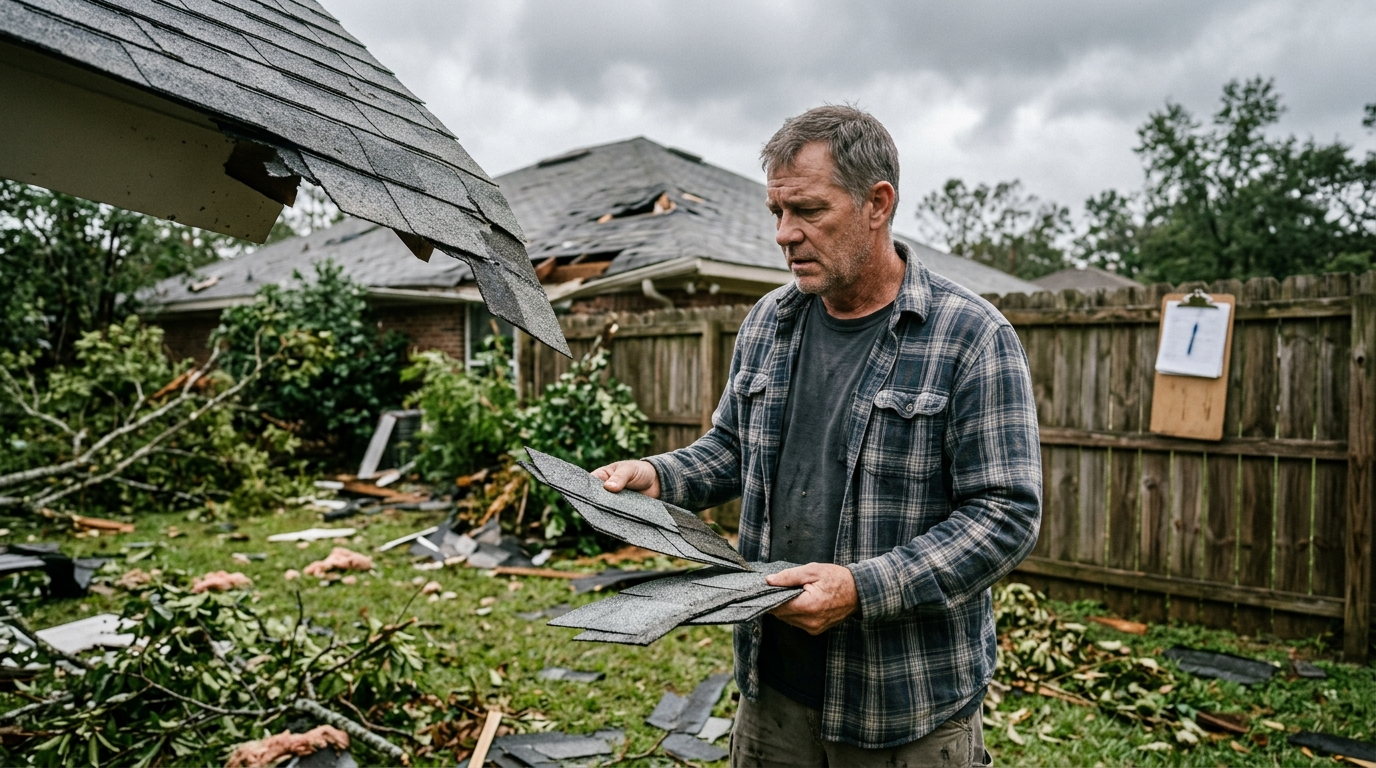
This is the detail that catches people off guard at claim time. Many Alabama homeowners policies include a separate wind/hail deductible calculated as a percentage of your insured dwelling value rather than a flat dollar amount. On a $300,000 home with a 2% wind/hail deductible, you are responsible for the first $6,000 of any wind or hail claim before the policy pays anything. That is very different from a $1,000 flat deductible.
Percentage deductibles became common in Alabama after Hurricane Ivan in 2004 and have remained standard practice for many carriers, especially in southern parts of the state. They also appear frequently in central Alabama policies now. If your declarations page lists your deductible as "1% wind/hail" or "2% wind/hail," make sure you understand what that number means in real dollars before the next storm arrives.
Some carriers offer policies without percentage deductibles, or with lower percentages, in exchange for higher base premiums or other trade-offs. Working with an independent agent who can compare multiple carriers side by side makes it easier to find the right balance for your specific home and budget.
Flood insurance: the gap most Alabama homeowners don't know they have
Standard homeowners insurance does not cover flood. Full stop. Whether it is a tornado-driven downpour, a backed-up creek, or a tropical remnant dumping 10 inches of rain in 24 hours, water that enters your home from the ground up is not a covered peril under your HO-3 policy.
Flood insurance in Alabama is available through the National Flood Insurance Program (NFIP) and through private flood carriers that offer faster claims, broader coverage, and sometimes lower prices than the NFIP. You do not have to live in a high-risk flood zone to buy it, and for most homeowners outside mapped Special Flood Hazard Areas the premium is often under $500 per year for a basic policy.
The 2021 flooding events across Jefferson, Shelby, and Chilton counties were a reminder that "not in a flood zone" does not mean "not at risk." FEMA flood maps rely on historical data that does not always account for how drainage patterns change as communities grow. For a closer look at coverage options, our post on flood insurance in Alabama walks through the NFIP vs. private market options in more detail.
Liability coverage and personal umbrella protection
Liability is often the most overlooked part of a homeowners policy. If a guest slips on your back steps in Helena, your dog bites a neighbor in Hoover, or your child damages someone's property, your homeowners liability coverage is what responds. Standard policies carry $100,000 in personal liability, but that amount can go quickly given today's legal and medical costs.
Most insurance professionals recommend at least $300,000 in homeowners liability, and for homeowners with meaningful assets, a personal umbrella policy is worth a serious conversation. Umbrella policies typically start at $1 million in additional liability coverage and cost between $150 and $300 per year for that first million, making them one of the better values in personal insurance. They layer on top of your homeowners and auto liability limits and take over when those limits are exhausted.
How to get the right coverage (not just the cheapest quote)
Shopping for homeowners insurance in Alabama is not just about finding the lowest number on a quote sheet. Carrier financial strength matters: can they pay claims quickly when half of Birmingham is filing them after the same storm? Policy form details matter too. Is your personal property covered at replacement cost or actual cash value (which factors in depreciation)? Do high-value items like jewelry, firearms, or musical instruments have sub-limits that leave you short?
A few practical steps before you buy or renew:
- Know your replacement cost. Ask your agent to run a replacement cost estimate based on your home's square footage, construction type, and finishes. Many homeowners are underinsured because their coverage amount reflects an old purchase price, not today's building costs.
- Review your personal property limits. If you have high-value items, ask about a scheduled personal property endorsement for jewelry or a collections policy.
- Ask about discounts. A new roof, alarm system, newer home construction, bundling your auto and home with the same carrier (which can reduce total premium by 10-20%), and loyalty discounts all vary by company.
- Compare carriers, not just premiums. An independent agent can pull quotes from multiple companies and help you compare coverage terms, not just the bottom-line number.
On the topic of bundling, if you have not looked at combining your home and auto with the same carrier recently, there is real money on the table for most Alabama households. Our guide on how Alabama homeowners can save by bundling insurance breaks down how multi-policy discounts work and what to watch out for when you bundle.
Work with a local independent agent in Alabama
The Rinehart Agency is an independent insurance agency serving homeowners across central Alabama, including Birmingham, Hoover, Pelham, Alabaster, Helena, Calera, Tuscaloosa, and communities throughout Shelby, Jefferson, and the surrounding counties. Because we are independent, we are not tied to a single carrier. We shop your coverage across multiple highly rated companies to find the combination of price, coverage, and claims service that fits your home and your situation.
If your current policy is coming up for renewal, or if you have not compared rates in the past two or three years, now is a good time to take a fresh look. Alabama homeowners insurance rates have shifted considerably across most carriers in recent years, and what was competitive two years ago may not be the best option today. To get started, contact The Rinehart Agency online or call us at (205) 671-5555 . There is no obligation, and the conversation might save you real money while making sure you are actually covered when it counts.