Crime insurance for Alabama small businesses: understanding the real risk
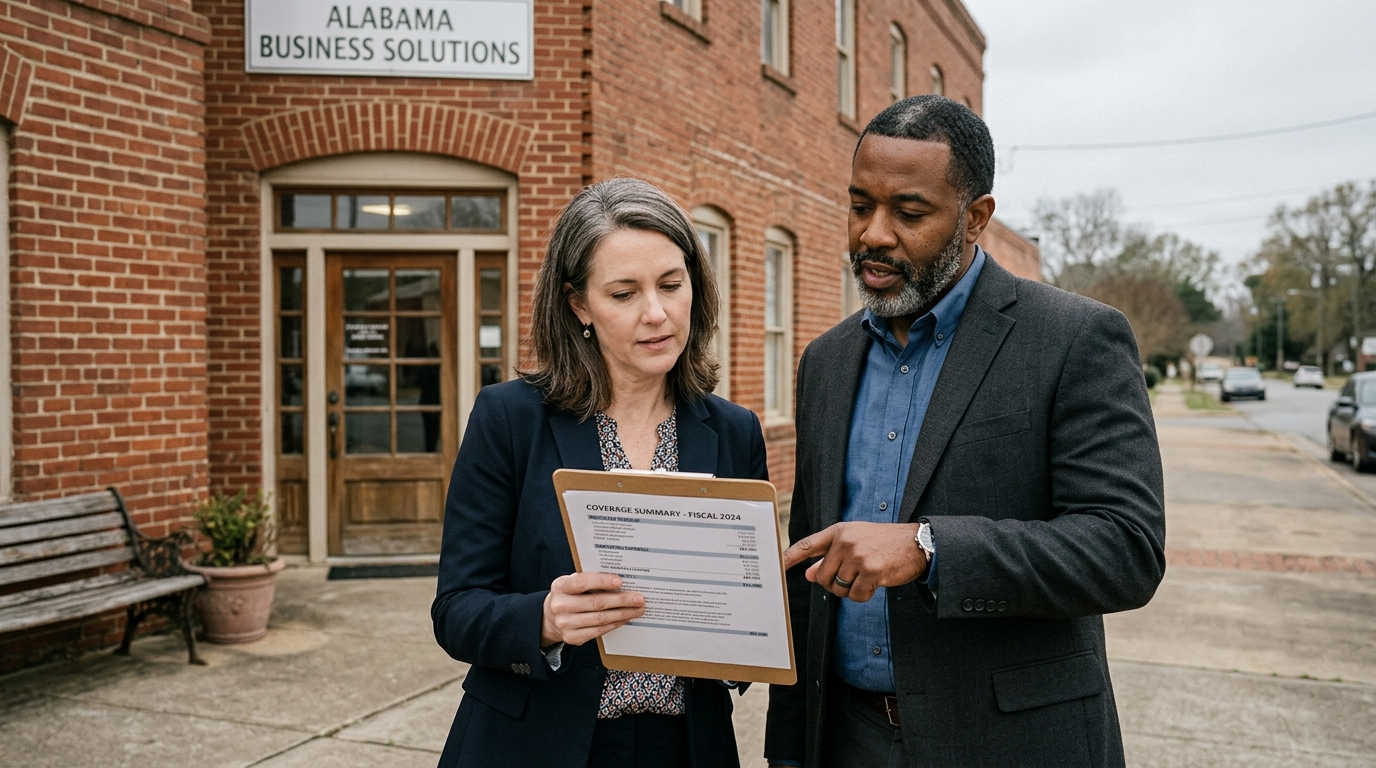
Crime insurance for Alabama small businesses is one of the most overlooked coverages in the commercial market, yet the losses it covers are among the most personal and disruptive a business owner can face. This isn't about a stranger breaking a window. It's about a trusted employee skimming cash from the register for two years, a vendor submitting fraudulent invoices, or a cybercriminal tricking your bookkeeper into wiring money to a fake account. These scenarios happen to real businesses in Birmingham, Tuscaloosa, Hoover, and towns across Alabama every year, and most standard commercial policies don't cover a dollar of it.
What crime insurance actually covers
Many business owners assume their commercial property policy covers them for theft. In a narrow sense, it might cover break-in theft by an outsider. But employee dishonesty, forgery, fraud, and social engineering are almost always excluded from a standard property form. That's where a dedicated crime policy steps in.
Crime insurance is a specialty commercial line that typically bundles several distinct coverage parts into one policy. The most common include:
- Employee theft: covers direct financial loss caused by a dishonest employee, whether they're stealing cash, inventory, or company property over time.
- Forgery and alteration: covers losses when someone forges your signature on a check or alters a financial instrument drawn on your account.
- Computer fraud: covers losses resulting from unauthorized computer instructions that transfer your money to a third party.
- Funds transfer fraud: covers losses when a fraudster impersonates a vendor or executive and tricks your staff into authorizing a wire transfer.
- Money and securities: covers theft, destruction, or disappearance of cash, checks, or securities both on your premises and in transit.
- Social engineering fraud: covers losses when an employee is deceived by a convincing impersonation into voluntarily transferring funds. This is increasingly common and often sold as a separate endorsement.
The exact coverage parts available depend on the carrier and the policy form, which is one reason working with an independent agent who can compare multiple carriers matters here.
Why Alabama small businesses are more exposed than they think
Alabama has a strong small-business culture. Retail shops in Talladega, construction firms in Jasper, medical offices in Alabaster, restaurants in Gadsden: these are often family-run operations with lean teams where a great deal of trust is placed in a small number of people. That trust is exactly what creates vulnerability.
A few realities worth considering:
- The average employee theft scheme runs for 18 months before discovery, according to data from the Association of Certified Fraud Examiners. During that window, small businesses lose a median of around $150,000 per incident.
- Small businesses are disproportionately targeted because they typically have fewer internal controls than large corporations: no dedicated accounting department, no segregation of duties, no regular audits.
- Wire fraud and business email compromise are growing fast in Alabama, as they are nationally. The FBI's 2023 Internet Crime Report showed business email compromise losses totaling over $2.9 billion across the U.S., and no state is immune.
- Most crime goes undetected until significant damage is done. Employees who steal often manipulate records, so the loss doesn't appear as an obvious discrepancy right away.
None of this means you should distrust your employees. It means your business deserves a financial backstop for the rare case where trust is violated, just as you carry general liability insurance for accidents you don't expect to happen.
How crime insurance differs from cyber liability
There is meaningful overlap between crime insurance and cyber liability insurance, and the line between them can get blurry. A few important distinctions:
Cyber liability focuses on data breaches, ransomware attacks, and the costs of notifying customers, restoring systems, and defending lawsuits after a network intrusion. It covers first-party and third-party damages arising from a cyber event.
Crime insurance focuses on the actual financial theft of money, securities, or property, whether the method is digital or old-fashioned. If an employee manipulates your accounting software to redirect payroll to their own account, that's typically a crime claim, not a cyber claim.
Social engineering and computer fraud are where things get complicated. Some cyber policies include social engineering; some crime policies include it as an endorsement; some carriers offer both in a package. This is precisely the kind of gap analysis an independent agent should walk through with you before you bind either policy, because buying both and still having a gap in the middle is a real and frustrating outcome.
Who needs a standalone crime policy in Alabama?
Not every business needs a dedicated crime policy. Some businesses have sufficient coverage through a Business Owners Policy (BOP), which typically includes a modest employee dishonesty limit, often around $10,000. For a solo consultant or a two-person shop, that might be enough.
But if your business has any of the following characteristics, a standalone or broader crime policy deserves serious consideration:
- Multiple employees with access to cash, accounts, or financial systems: the more people touching the money, the higher the exposure.
- High cash volume: retail, restaurants, service businesses, and event venues all handle significant cash that's hard to audit in real time.
- Accounts payable or payroll managed by a small team: if one person writes checks and reconciles the accounts, the internal control structure is almost nonexistent.
- Vendor relationships involving wire transfers or ACH payments: fraud schemes targeting vendor impersonation have grown sharply over the last five years.
- Professional service firms: attorneys, CPAs, real estate offices, and healthcare practices handle client funds and sensitive financial data that create both crime and fiduciary exposure.
- Nonprofits and associations: boards often consist of volunteers who aren't watching the books closely, and employee dishonesty in nonprofits is a documented and underreported problem.
If your BOP's $10,000 employee dishonesty limit wouldn't cover three weeks of your payroll, it's time to talk about a broader crime policy.
How crime insurance is priced and structured
Crime insurance premiums are generally affordable relative to the exposure they cover. A small Alabama business might pay anywhere from $300 to $1,500 per year for a standalone crime policy, depending on industry, revenue, number of employees, and the specific limits and coverage parts selected.
A few structuring decisions will affect both your premium and your protection:
Limits: Crime policies are typically written with per-occurrence limits. Common limits for small businesses range from $25,000 to $500,000. Think about your worst realistic scenario: if one employee had unsupervised access to your accounts for two years, what's the maximum they could have taken? That's your starting point for the limit conversation.
Deductibles: Crime policies carry deductibles just like other commercial lines. A higher deductible lowers the premium but means you absorb more of a small loss. For many businesses, a $2,500 to $5,000 deductible is a reasonable balance.
Discovery period: Crime policies are typically written on a "discovery" basis, meaning the claim must be discovered during the policy period or within a short window after expiration. This matters if you switch carriers: you may need a tail or extended discovery period to protect against losses that occurred before the switch but weren't discovered until after.
Coverage triggers: Read the definitions carefully. "Employee" under a crime policy may or may not include contractors, temporary workers, or leased employees. If your business uses any of those, verify they're covered or add them explicitly.
Steps Alabama business owners can take to reduce crime exposure
Insurance is a financial backstop, not a substitute for basic internal controls. The following steps reduce your exposure and may support a faster, smoother claims process if a loss does occur:
- Segregate duties: the person who approves payments should not also be the person who reconciles the bank account. Even in a two-person office, rotate these responsibilities.
- Require dual authorization on wire transfers: many banks will set this up at no cost. Any outgoing wire above a set threshold requires a second approval from a different person.
- Review bank and credit card statements yourself: as the owner, go through them monthly, even if you have a bookkeeper. Thieves count on owners not looking.
- Run background checks on employees with financial access: this is standard practice and a reasonable condition to enforce during hiring.
- Establish a vendor verification process: any request to change a vendor's bank account or payment details should trigger a phone call to the vendor using a number already on file, not a number from the email requesting the change.
- Document your procedures: in the event of a claim, your insurer will want to see that you had reasonable controls in place. Documentation protects your claim.
These steps don't eliminate the risk, but they reduce it and demonstrate to your carrier that you're a careful, low-risk client, which can help at renewal.
How The Rinehart Agency can help protect your Alabama business
At The Rinehart Agency , we work with small and mid-sized businesses across Alabama as an independent agency, which means we're not tied to any single insurance company. We can compare crime insurance options across multiple carriers to find the right limits, coverage parts, and price for your specific business and industry.
Crime coverage rarely comes up until after a loss, and by then it's too late to add it. Whether you run a retail shop in Hoover, a contractor business in Bessemer, or a professional services firm in Birmingham, we can review your current commercial coverage and identify gaps, including the ones hiding in your BOP's small print.
If you'd like to learn more about how commercial crime coverage fits into a complete small-business insurance program, our Alabama small business insurance guide is a good place to start. And if you're ready to talk specifics, contact The Rinehart Agency or call us at (205) 671-5555 . We'll take the time to understand what your business actually does and make sure the coverage you're paying for actually protects it.