What Alabama RV insurance actually covers
Alabama RV insurance is more than a box to check before you pull out of the driveway. Whether you're rolling down I-65 toward Gulf Shores, parked at Logan Martin Lake for the weekend, or living full-time in your rig, the right coverage protects a vehicle that can easily represent $50,000 to $500,000 in value and doubles as your home away from home. Standard auto insurance was built for cars and trucks, not for motorhomes or travel trailers, and the gaps can cost you dearly if something goes wrong on the road or at the campsite.
RV insurance policies are specifically designed to address those gaps. Below is a breakdown of what a well-structured policy typically includes.
Liability coverage
If you cause an accident on the road and injure someone or damage their property, liability coverage pays for those losses up to your policy limit. Alabama requires motorized RVs to carry at least the state minimum auto liability limits, but those minimums ($25,000 per person / $50,000 per accident for bodily injury, and $25,000 for property damage as of 2024) are often nowhere near enough when a Class A motorhome is involved. Most RV owners are better served by limits of $100,000/$300,000 or higher, and a personal umbrella policy can extend that protection further.
Collision and comprehensive
Collision covers damage to your RV from an accident, whether you hit another vehicle or a guardrail on a mountain switchback. Comprehensive covers non-collision events: theft, fire, vandalism, falling objects, and the severe weather Alabama is known for, from spring hailstorms to tropical remnants that sweep in from the Gulf. If you financed your RV, your lender almost certainly requires both coverages.
Total-loss replacement and actual cash value
When an RV is totaled, standard policies pay actual cash value (ACV) , meaning depreciation is subtracted from the payout. A $120,000 motorhome that has depreciated significantly could leave you with a check that won't cover a comparable replacement. Some carriers offer agreed value or total-loss replacement endorsements that pay a pre-agreed amount or cover the cost of a comparable new unit. If you have a newer or high-value RV, ask your agent whether this option is available.
Personal belongings and attachments
Your RV probably carries laptops, cameras, bikes, kayaks, outdoor furniture, and thousands of dollars in personal gear. Standard auto policies exclude personal property inside the vehicle. A dedicated RV policy typically includes personal effects coverage for contents inside the RV and may extend to exterior attachments like awnings and satellite dishes. Coverage limits vary, so review them carefully against what you actually carry.
Emergency expense and vacation liability
Two coverages that are often overlooked make a real difference. Emergency expense coverage pays for lodging and travel if your RV breaks down far from home and needs extended repairs. Vacation liability covers your legal responsibility for injuries or property damage that occur at your campsite, acting like homeowners liability when you are using your RV as a temporary residence. If you camp regularly at state parks in Talladega National Forest or at places like Oak Mountain State Park, this coverage matters.
Types of RVs covered and why it matters
Not all RVs are treated the same by an insurance underwriter, and the type of unit you own affects how you need to insure it.
- Class A motorhomes : the largest motorized RVs, often diesel pushers; treated most like a vehicle and a home combined, with correspondingly broader coverage needs
- Class B camper vans : smaller, more maneuverable units that are sometimes insured under a standard auto policy, though a dedicated RV policy often provides better coverage for full-time or extended use
- Class C motorhomes : mid-size motorized units built on a truck or van chassis; similar coverage considerations to Class A
- Fifth-wheel trailers : towed by a pickup truck; the tow vehicle's liability typically covers accidents while towing, but the trailer itself needs separate coverage for physical damage and contents
- Travel trailers and pop-up campers : also towed units; liability from the tow vehicle may apply on the road, but comprehensive and collision on the trailer requires its own policy
- Toy haulers : trailers that carry off-road vehicles, ATVs, or motorcycles; the RV policy may or may not cover the toys inside, so confirm this with your agent
If you also own a boat or a motorcycle, it is worth discussing how all of those policies interact. A gap in one coverage area can create a gap in another. You can learn more about how Alabama riders protect themselves on two wheels at our Alabama motorcycle insurance guide.
Full-time versus part-time RV use in Alabama
How you use your RV is one of the most important underwriting questions you will answer, and giving an inaccurate answer can result in a denied claim.
Part-time or recreational use typically means you take the RV out for trips, campouts, or extended weekends a few times a year. Most standard RV policies are written for part-time users, and the premiums reflect that lower exposure.
Full-time use is a different category. If you live in your RV for more than six months of the year, or if it is your primary residence, you need a full-timer policy . These policies include features similar to homeowners insurance: liability coverage at your permanent location, loss of use (covering lodging while your RV is being repaired), and broader personal property coverage. A standard part-time policy applied to a full-timer can be voided at claim time, leaving you with nothing.
Alabama does not have a specific RV titling or registration law that distinguishes full-timers, but the insurance classification is still critical. If you have sold your home and your RV is your only residence, be straightforward with your agent. The right policy exists; you just need to ask for it.
What affects the cost of Alabama RV insurance
Premiums vary widely depending on several factors. Understanding them helps you make informed decisions when comparing quotes.
- RV type and value : a $30,000 travel trailer and a $300,000 Class A diesel pusher are priced very differently; the higher the replacement cost, the higher the premium
- How often and how far you travel : more miles mean more exposure; full-timers generally pay more than occasional campers
- Storage location : keeping your RV at a secured, enclosed storage facility can reduce your comprehensive premium compared to leaving it in an open driveway
- Driving record : at-fault accidents and traffic violations affect your rate just as they do for any vehicle policy
- Deductible choices : opting for a higher deductible ($1,000 or $2,500 instead of $500) can reduce your premium, but make sure you can absorb that cost out of pocket if something happens
- Bundling discounts : carrying your RV policy with the same carrier as your home and auto can unlock meaningful multi-policy discounts
- Safety features and certifications : some carriers offer discounts for completing an RV safety course or for units equipped with anti-theft devices
On bundling: Alabama homeowners who consolidate their policies regularly save 10-20% or more on their overall insurance costs. If you are not bundling, you are likely leaving money on the table.
Alabama-specific risks every RV owner should know
Alabama presents several weather and environmental risks worth understanding before you hit the road or set up camp.
Severe thunderstorms and tornadoes. Alabama sits in Dixie Alley, one of the most tornado-active regions in the country. A tornado or straight-line wind event can destroy an RV parked at a campsite with little warning. Comprehensive coverage is your protection here, and it is not optional in this state. For more context on how severe weather affects property coverage broadly, our Alabama tornado insurance guide covers the topic in depth.
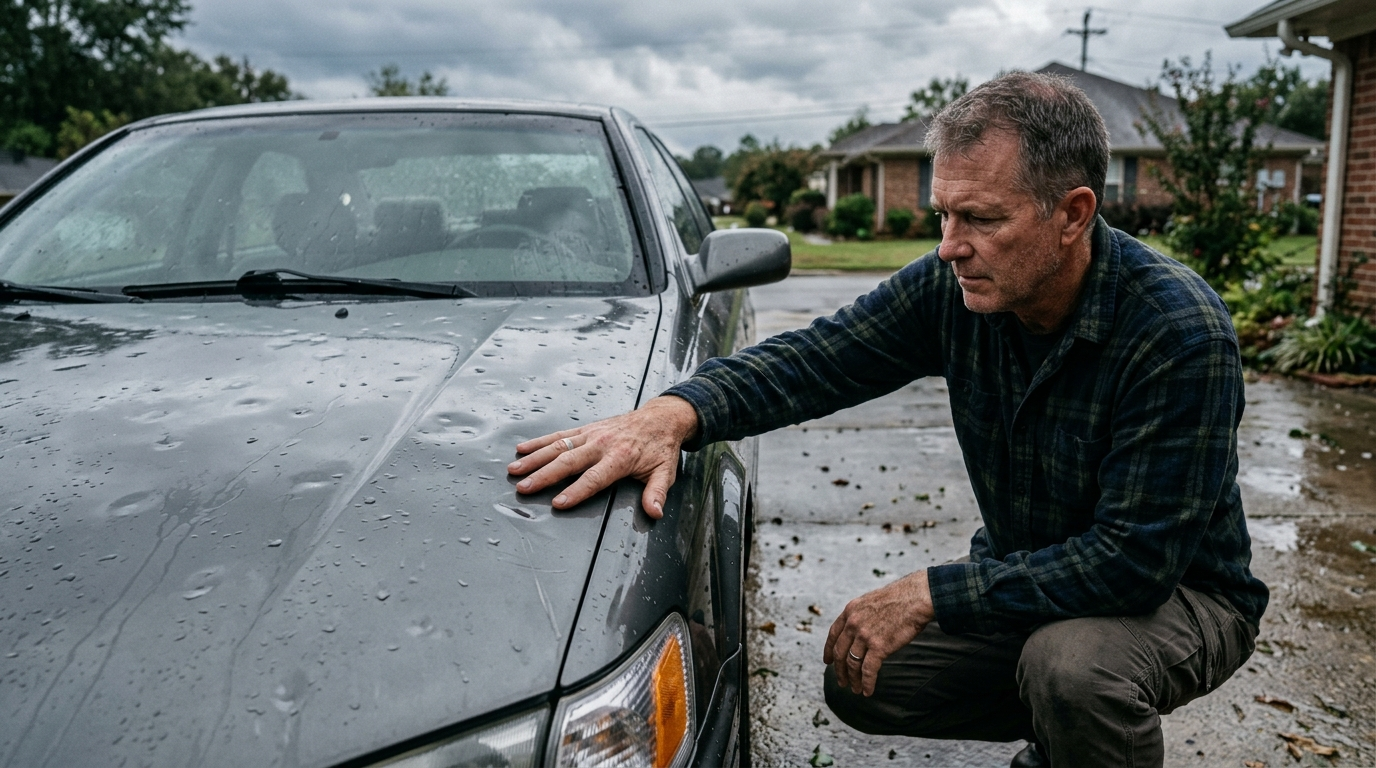
Hail. Hailstorms hit central Alabama hard, especially in spring. A single storm can leave a fiberglass or aluminum roof looking like a golf ball. Comprehensive covers hail damage, but if you are underinsured or carrying only liability, you are paying out of pocket.
Flooding. Campgrounds near rivers like the Coosa, the Cahaba, or the Black Warrior can flood quickly after heavy rain. Comprehensive coverage includes flood damage to your RV (unlike homeowners policies, which require a separate flood policy). That said, always check campground elevation and local flood history before you park for the week.
Theft and break-ins. RVs parked in storage lots or at campgrounds can be targets for theft of both the vehicle and the contents inside. Comprehensive covers the RV; personal effects coverage handles your gear. Make sure your limits reflect what you actually have inside.
Wildlife collisions. Deer and other animals are a genuine hazard on Alabama's rural roads, especially at dawn and dusk. Comprehensive covers animal collisions, not collision coverage, so the deductible and payout work differently than a fender-bender with another vehicle.
How to shop smarter for RV insurance in Alabama
Shopping for RV insurance on your own usually means getting quotes from whichever carriers advertise most heavily. Working with an independent agent changes that: the agent shops multiple carriers on your behalf and finds the one that fits your specific RV type, use pattern, and budget.
A few things to have ready before you shop:
- Year, make, model, and VIN : basic identification for any quote
- Current mileage and condition : affects ACV and replacement cost calculations
- How many months per year you use it : helps determine whether you need a full-timer or part-time policy
- Where it is stored when not in use : secured storage often earns a discount
- What you carry inside : estimate the value of your personal property so you don't underinsure your gear
- Your other policies : bundling opportunities depend on who currently holds your home and auto
With those details in hand, a good agent can generate multiple quotes quickly and walk you through the differences in coverage, not just price. A cheaper policy that excludes full-timer liability or caps personal effects at $1,500 is not actually a better deal.
It is also worth asking about lay-up periods . Some carriers allow you to suspend certain coverages (collision, for example) during months when the RV is in storage and not being driven. This can reduce your annual premium meaningfully if you only camp from April through October.
Get the right RV coverage through an independent agent
At The Rinehart Agency , we are an independent insurance agency serving Alabama drivers and families from Birmingham and Hoover to Talladega, Tuscaloosa, and beyond. That means we are not tied to a single carrier. We compare rates and coverage options from multiple companies to find the policy that actually fits your RV, your lifestyle, and your budget.
Whether you are a weekend camper, a seasonal traveler heading south every winter, or a full-timer with your motorhome as your primary address, we can help you build a policy that covers what matters. You can explore your options on our Alabama RV insurance page, or reach out directly to start a conversation.
Ready to get a quote? Contact The Rinehart Agency online or call us at (205) 671-5555 . We will do the shopping so you can get back to planning your next trip.